
Nature on the Board — in the words of those who are living it
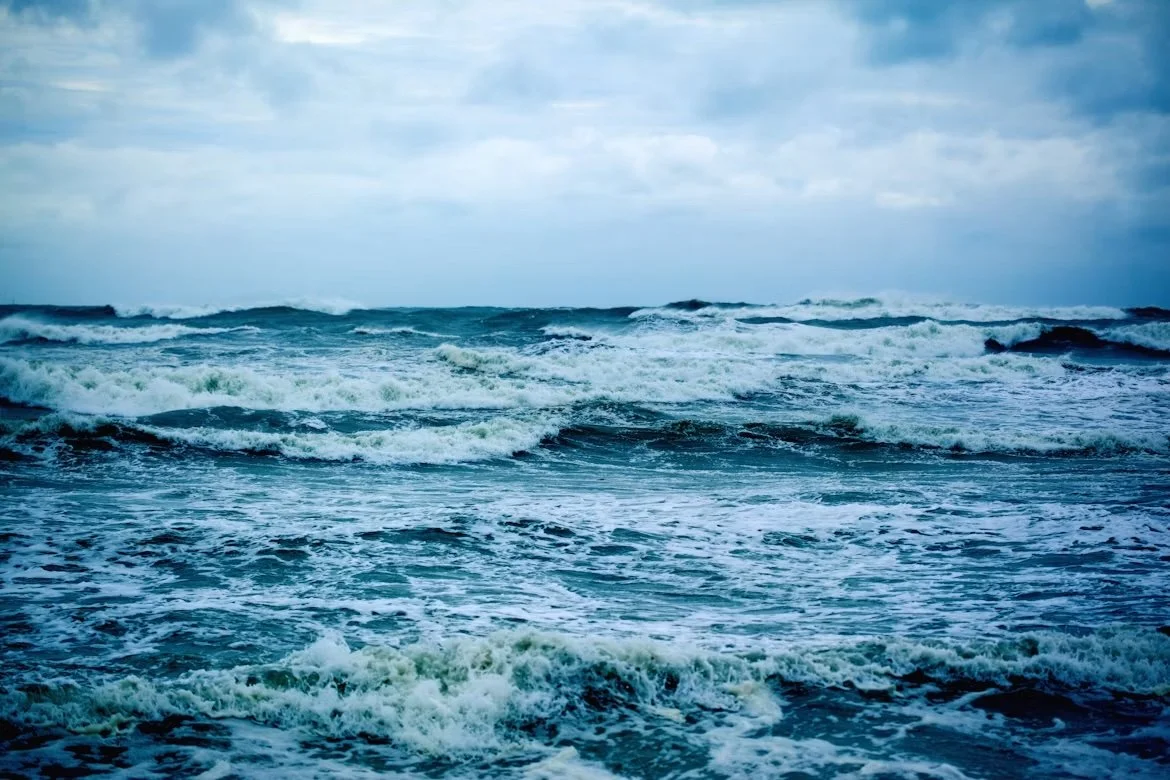
The Atlantic Ocean, given a voice on the board of the Scottish Association for Marine Science
I’ve been working with Nature on the Board at Faith In Nature since 2021. And, in those early days, I felt the need to share as much and as often as possible. But, of course, the hope was always that this would grow beyond us.
As the fates would have it, a few health issues earlier in this year forced me to step back from that relentless sharing. That stepping back coincided with the release of my book — Nature’s Boardroom — so publicity was scaled back, and I’ve remained largely silent through this period when a writer might otherwise step up their speaking engagements.
And what a happy coincidence that’s been. The book’s been allowed to do its own talking — detailing all of my own learnings at the time of writing. And, in my own silence, I’ve enjoyed sitting back and hearing what others have to say. This is exactly as it should be.
Part of the Nature on the Board framework at Faith In Nature is our annual reporting — detailing all that’s happened in the past year. And, at the end of those reports, is Nature’s ‘right to reply’. It’s the Nature Guardians’ opportunity to confirm that everything in the report is an accurate reflection of what’s gone before and that nothing has been deliberately omitted. All of those reports are here. In as much as there is one, it’s the tightest safeguard we have against greenwashing. But it’s not just a safety measure, it’s also an opportunity for reflection.
Given the time that’s now passed, other organisations’ reports are beginning to come online. And what we’re seeing already is a shared experience of those who’ve implemented the model. There is something true in all of this.
***
From Regen Melbourne, written by Dr Dominique Hes:
“Over the past twelve months, Regen Melbourne has undertaken a quiet but profound experiment by inviting nature into our boardroom. What began as a conceptual curiosity has evolved into a practice that has enriched our governance, deepened our strategic thinking and impacted directors at a personal level. This first year has shown that when nature is given space to speak – via stories, symbols, reflection and sensory experience – the organisation itself becomes more attuned, grounded and courageous.”
“The most consistent learning among the Regen board since nature joined has been the shift away from purely cognitive and analytical modes of governance. Our directors described nature’s presence as activating “a different part of the brain,” allowing for more embodied, intuitive and systemic thinking. Observing or reflecting on nature has widened time horizons, encouraged pausing, and invited deeper questions about ecosystems, interdependence and long‑term stewardship.”
"Our directors repeatedly noted that allowing nature to speak made it easier for them to show up more fully – not as bifurcated professionals, but as whole people. Whether through stories, seasonal imagery or nature-based rituals, the practice brought authenticity and presence into the room. Meetings in natural environments amplified this effect, creating a sense of potential and expanding the collective imagination. Importantly, this integration did not remain at the level of symbolism. It influenced postures, mindsets and interpersonal dynamics. The Regen board felt more grounded, open and able to hold complexity – qualities essential for regenerative governance.”
***
From Gower Street Trust, written by Tessa Durham:
“At key moments of reflection on our strategy and the impact of the work we have funded, we have often noted that the nature-based work was often the most joyful aspect of our work.”
“A key personal reflection is that once you embark on this work, it impacts your thinking in every aspect of your life. Once you understand that nature is integral to life and needs a voice at the table, you naturally start to manifest that in all that you do. For me, I have brought nature onto my school governing board – this is pretty unorthodox in the education system but makes perfect sense. The role has already brought new opportunities, perspectives and vibrancy to our school community.”
“We often reflect that nature has brought joy to our work as it has encouraged us to be wilder and less boundaried in how we structure and run our meetings and how we make funding decisions. It has provoked us to question our systems and processes and challenged the status quo within our organisation.”
***
From National Infrastructure Commission for Wales, written by Dr Elspeth Jones:
“The central finding is not that the pilot has “solved” the challenge of delivering better outcomes for nature, but that it has triggered the forging of a new path – altering how questions are asked, how trade-offs are surfaced, and how responsibility is understood. The presence of a Nature Guardian moved nature from being a background consideration to something explicitly present in the room. This shift was subtle and uneven – but real. ”
“Notably, half of the Commissioners that responded to the survey reported that the pilot had changed their own personal approach to decision-making “a great deal”. Some expressed surprise at the extent to which the Nature Guardian’s presence challenged their assumptions, even where they considered themselves already attentive to environmental issues.”
“Commissioners reported a sense that an accumulation of small nudges observed during the pilot period would be likely to add up to more significant influence on outcomes over time. As one Commissioner described it, “Like a ship – instead of heading North (say Nature-neutral) it has now shifted a few degrees west in a more Nature-friendly direction. So, on day 1, the outcomes would be identical. By day 150, we are already several km away from where our original course would have taken us.”
***
When I read through the above, I see a greater focus on joy, on freedom, on richer conversations, a more rounded human experience and a shift in thinking and decision making. And I can relate to it all. It is all exactly as we’ve experienced the model at Faith In Nature.
There is often a misconception that Nature on the Board was designed as some green authoritarian force to police the board. It wasn’t. It was designed as a tool to help us make better informed decisions that take the needs of the natural world into account. And that is exactly what it does.
And, just this morning, came the story of the Scottish Association for Marine Science (SAMS) appointing the Ocean to its board of trustees. Nick Owens, a marine scientist and director of SAMS, closes the piece by saying:
“Capitalism created the situation that we’ve got now,” says Owens. “But I think realistically it’s going to be industry and capitalism and human society that’s going to get us out of it. Rightly or wrongly, it is going to be the boardrooms where decisions are taken. I genuinely believe that in a decade or so this will be common practice.”
I really hope he’s right. But the reality is, four years in, there are still fewer than thirty organisations that have done this too. The optimist in me believes we’re changing something. But progress is slow and my worry is that there’s a lot more positive noise around the idea than there is action. Still, for those that have taken the leap, there is growing evidence that that it’s worked for them. And perhaps, on a macro level, that’s exactly what this needs.
But on a micro level, I was recently asked “If you’d known that no other organisation would do as Faith In Nature did, would you still have done it?” My answer was an immediate Yes. Of course. Because it’s helped us do exactly as we set out to do — make better informed decisions that take the needs of the natural world into account. I have no say over what happens in other organisations, but if I can bring about that change in the one where I have some influence, then absolutely I’d want that.
As we try to navigate our way through a climate emergency, we should all want that. Shouldn’t we?